Automation Advantages Every Aluminum Casting Company Should Understand
The Function of CNC Finishing in Enhancing Light Weight Aluminum Factory Castings
CNC completing modern technology greatly influences the manufacturing of aluminum factory castings. By attaining precise machining and exceptional surface area top quality, it aids fulfill extensive market criteria. The process decreases and decreases issues rework, enhancing general product performance. Additionally, the aesthetic high quality of the spreadings is boosted with advanced ending up techniques. Comprehending the complexities of this technology discloses its crucial role in modern-day production, triggering a more detailed assessment of its applications and future developments.
Recognizing CNC Finishing Technology
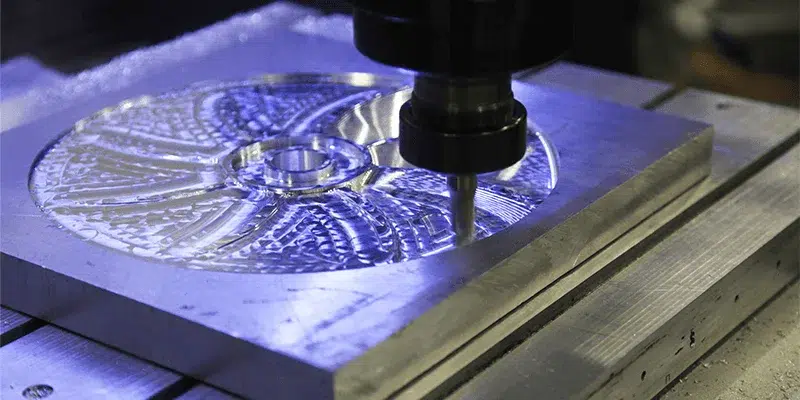
CNC finishing modern technology stands for a significant advancement in the accuracy machining of aluminum spreadings. This innovation utilizes computer numerical control (CNC) systems to automate the machining process, enhancing precision and performance. By employing sophisticated software application, CNC machines can interpret intricate layouts and implement detailed cutting, boring, and milling jobs with marginal human intervention.
The technology is especially beneficial in the context of aluminum spreadings, which call for specific resistances and surface area coatings. CNC completing assurances that each element satisfies exact specs, minimizing the possibility of issues and improving total high quality. The repeatability of CNC procedures enables for uniformity throughout production sets, which is essential for markets requiring high criteria.
As suppliers significantly take on CNC ending up technology, they take advantage of decreased manufacturing times and regular outcomes, positioning themselves competitively in the market. This innovation marks a critical shift in the capacities of light weight aluminum spreading procedures.
Benefits of CNC Finishing for Light Weight Aluminum Castings
While many machining methods exist, the benefits of using CNC completing for aluminum spreadings are especially considerable - Aluminum Casting. CNC finishing offers improved accuracy, making certain that parts meet exact requirements and tolerances. This level of precision minimizes the threat of defects, which can result in costly rework or product failings. In addition, CNC finishing improves surface quality, resulting in smoother finishes that are cosmetically pleasing and practical, especially for applications calling for limited tolerances
An additional advantage is the increased performance in production, as CNC machines can run continually with very little human treatment. This enables greater result and reduced labor costs. CNC modern technology assists in the creation of complex geometries that might be testing to accomplish via conventional approaches, increasing design opportunities. On the whole, the assimilation of CNC finishing right into aluminum spreading processes not just improves product quality but likewise adds to functional performance and design flexibility.
The CNC Finishing Refine Explained
The CNC completing procedure includes a collection of exact methods made to improve the surface quality of light weight aluminum castings. This section will certainly describe the various CNC finishing strategies, the benefits they supply, and their applications within the domain name of light weight aluminum castings. Understanding these aspects is essential for maximizing manufacturing and accomplishing preferred specs in finished items.
CNC Finishing Techniques Introduction
Precision specifies the CNC completing procedure, where light weight aluminum castings undertake different strategies to accomplish ideal surface area quality and dimensional accuracy. Typical methods consist of milling, turning, and grinding, each matched for certain applications. CNC milling involves eliminating material using revolving cutters, enabling elaborate shapes and contours. Turning, on the other hand, uses a rotating workpiece versus a stationary cutting device, ideal for cylindrical attributes. Grinding is made use of for achieving fine surface coatings and limited tolerances. Furthermore, strategies such as anodizing or polishing might be used post-machining to shield and boost visual appeals against deterioration. Each technique plays a crucial duty in making sure that the end product satisfies stringent requirements and efficiency requirements in varied industries.
Benefits of CNC Finishing
CNC completing deals countless benefits that significantly improve the general top quality and performance of aluminum spreadings. This precision-driven process assurances limited resistances and superior surface area coatings, which are crucial for applications needing high efficiency and longevity. CNC ending up decreases the danger of human mistake, offering constant outcomes throughout multiple elements. The automation of the ending up process not just enhances effectiveness yet also decreases manufacturing prices by decreasing material waste. Furthermore, CNC ending up enables for elaborate designs and intricate geometries to be attained, broadening the layout opportunities for developers and engineers. The improved surface high quality derived from CNC methods improves the visual appeal of the spreadings while additionally advertising far better bond for coatings and therapies, leading to longer-lasting items.
Applications in Light Weight Aluminum Castings
Applications for light weight aluminum castings benefit greatly from the CNC finishing procedure, which enhances both functionality and performance. This innovation is pivotal in industries such as vehicle and aerospace, where precision and longevity are crucial. CNC ending up permits the production of detailed layouts and tight tolerances, ensuring that actors parts fit effortlessly right into larger assemblies. Furthermore, the process improves surface area high quality, causing reduced friction and wear, which is especially helpful for relocating parts. The ability to develop complex geometries additionally opens up possibilities for lightweight structures, which add to total power effectiveness. Ultimately, CNC completing not just elevates the aesthetic appeal of light weight aluminum spreadings but additionally maximizes their operational effectiveness, making it a beneficial possession in modern-day production.
Quality Control Steps in CNC Finishing
Quality control procedures are vital in CNC ending up to assure the honesty and precision of aluminum spreadings. Techniques such as precision dimension, surface stability assessment, and issue detection play a critical duty in preserving high standards throughout the ending up process. Implementing these actions assists to determine and rectify prospective problems before final production, eventually boosting item quality.
Precision Dimension Strategies
Reliable precision measurement strategies are necessary for guaranteeing the highest possible criteria in aluminum spreading coatings. These methods involve making use of innovative devices such as coordinate determining makers (CMMs), laser scanning, and optical comparators to attain accurate dimensional analyses. By utilizing these approaches, makers can spot inconsistencies in resistances and keep consistency throughout production runs. Furthermore, the integration of digital measurement systems boosts real-time monitoring, permitting prompt modifications throughout the CNC finishing procedure. This proactive approach not only reduces scrap prices however additionally improves total item top quality. Implementing extensive measurement methods assures that spreadings fulfill rigorous specs, thereby fostering confidence ultimately product and strengthening the credibility of the factory in a competitive market.
Surface Area Integrity Analysis
Issue Detection Methods
Countless issue discovery methods are utilized in CNC finishing to ensure light weight aluminum castings meet stringent quality requirements. Visual examination remains a fundamental method, enabling drivers to determine surface irregularities and variances. Additionally, non-destructive screening (NDT) strategies, such as eddy and ultrasonic current testing, are utilized to find subsurface imperfections without endangering the integrity of the components. Automated optical examination systems additionally boost defect discovery by using innovative imaging innovation to examine surface area characteristics. In addition, dimensional inspection utilizing coordinate determining equipments (CMM) assures that castings follow specific specs. By incorporating these varied approaches, CNC completing procedures can efficiently determine and resolve potential issues, eventually boosting item top quality and efficiency, while guaranteeing conformity with sector requirements
Situation Researches: Successful Applications of CNC Finishing
As industries increasingly require precision and top quality in aluminum castings, successful applications of CNC completing have actually emerged as crucial study. One significant example is the automobile industry, where suppliers applied CNC completing to generate elaborate get rid of limited tolerances. This strategy minimized the demand for manual ending up, decreased production time, and improved general part efficiency.
In aerospace, a leading company embraced CNC ending up to improve intricate components, causing lighter frameworks without endangering strength. The accuracy accomplished via CNC modern technology permitted for a lot more efficient setting up processes and boosted the rules of aerodynamics.
In addition, a medical gadget manufacturer made use of CNC finishing to produce light weight aluminum housings for surgical instruments. The smooth and specific surfaces not only met rigorous regulative needs but additionally boosted the instruments' capability and toughness - Aluminum Casting. These situation researches highlight just how CNC completing greatly boosts the high quality and performance of light weight aluminum castings across numerous sectors
Future Patterns in CNC Finishing for Aluminum Foundries
The improvements in CNC finishing technology are poised to significantly influence light weight aluminum foundries in the coming years. Boosted automation and the assimilation of synthetic intelligence will permit even more efficient and precise machining procedures. This shift will certainly make it possible for shops to produce intricate geometries with decreased cycle times, improving performance and minimizing waste.
In addition, the surge of additive manufacturing techniques, such as 3D printing, is anticipated to complement CNC completing, providing ingenious services for complex style needs. As sustainability becomes a concern, green machining practices and the usage of recyclable products will likely obtain traction in the sector.
Often Asked Inquiries
Just How Does CNC Finishing Impact the General Price of Light Weight Aluminum Castings?
CNC ending up can substantially affect the general expense of aluminum spreadings by increasing manufacturing effectiveness and lowering material waste. The initial financial investment in CNC modern technology may raise upfront expenses, balancing long-lasting savings against temporary expenditures.
What Products Can CNC Finishing Be Applied to Besides Light weight aluminum?
CNC ending up can be related to various materials besides light weight aluminum, consisting of steel, brass, copper, plastics, Aluminum Foundry titanium, and composites. Each material advantages in a different way from CNC procedures, boosting accuracy, surface high quality, and total item efficiency.
Is CNC Finishing Eco Friendly?
CNC ending up is usually considered ecologically pleasant, as it decreases material waste via precision machining. Additionally, advancements in coolant and lubrication modern technologies better minimize ecological influence, advertising a much more lasting production procedure generally.
Just how Lengthy Does the CNC Finishing Refine Typically Take?
The CNC finishing process usually takes anywhere from a couple of hours to a number of days, relying on the intricacy of the part, the material being refined, and the details needs of the ending up tasks entailed.
What Precaution Are Essential During CNC Finishing Procedures?
Necessary precaution during CNC finishing operations consist of wearing personal protective equipment, guaranteeing correct machine protecting, preserving a clean office, sticking to secure handling procedures for materials, and performing regular devices evaluations to stop crashes.
The CNC ending up process involves a collection of exact techniques made to boost the surface top quality of light weight aluminum castings. Precision defines the CNC finishing procedure, where aluminum spreadings go through various techniques to accomplish suitable surface area high quality and dimensional precision. CNC finishing offers countless benefits that substantially improve the general top quality and functionality of light weight aluminum spreadings. Applications for light weight aluminum spreadings benefit greatly from the CNC ending up process, which boosts both functionality and efficiency. Surface honesty assessment plays an essential function in making certain that CNC completing procedures yield high-quality aluminum castings.